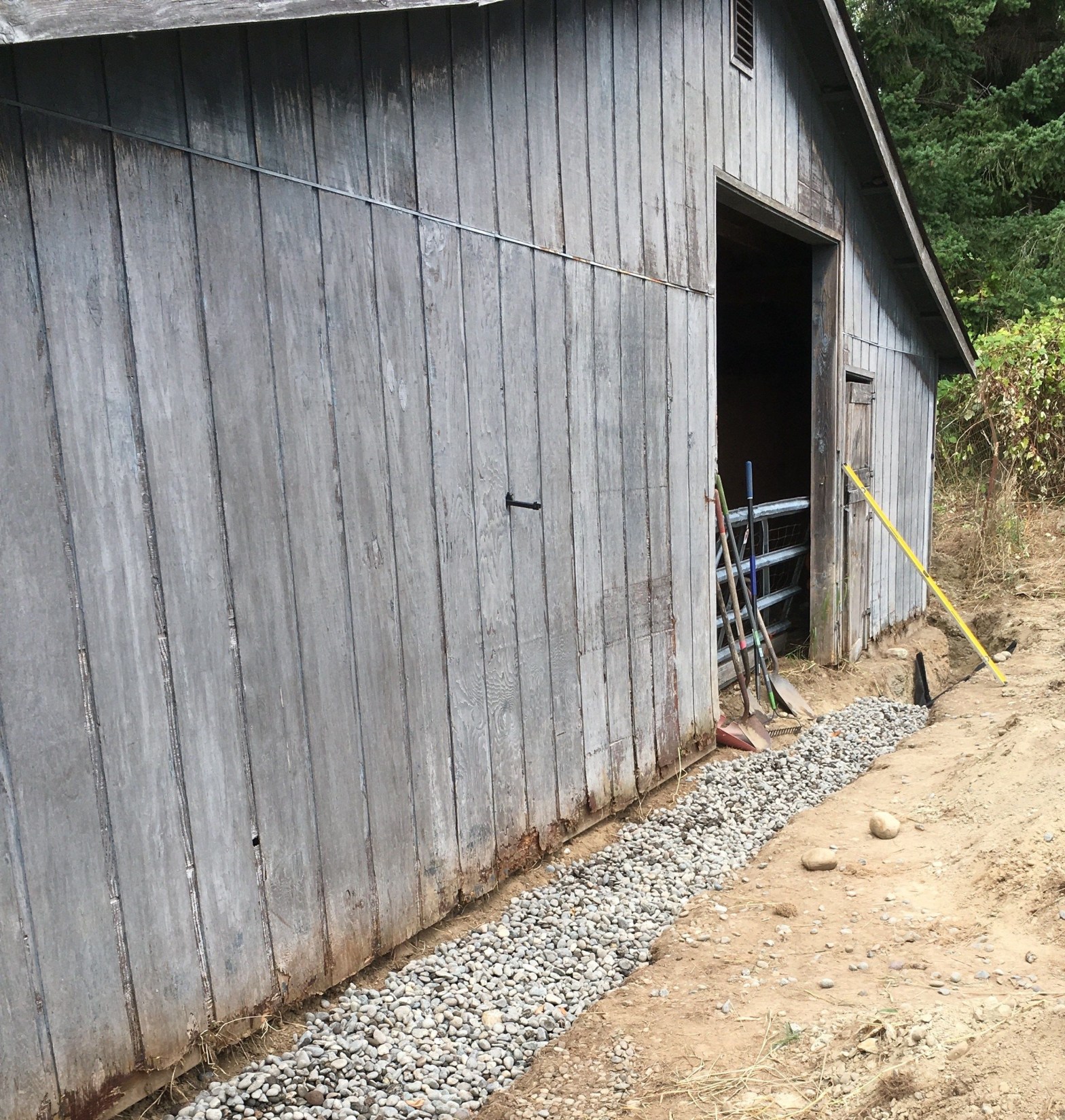
To keep or not to keep that was the question…
If there is one thing that we really enjoy, it is looking deep into a project and seeing the potential. But, there are times even we have to ask “Is it worth saving?”. That is what we had to ask ourselves when we looked at the barn that is on our property.

The barn has both positives and negatives. First, the location, it is pretty far from the house. When we first considered this it seemed like a negative. We were so used to having our horses close but after we considered the upside of getting more exercise every day it did not seem that bad.
Second, was it structurally sound? And if it was not what was it going to take to make it safe? After tons of analyzing we determined that the bones (posts and beams) of the barn were solid. The T111 siding left something to be desired. It is full of holes and rot from years of neglect. But really nothing that cannot be fixed relatively inexpensively. The roof was determined to be in pretty good shape especially once we removed all of the moss that had accumulated over the years.
Lastly, the barn was just a wide open space with a bunch of junk that had been left behind. We had to determine if we could build the stall space that we need without changing the structure of the barn. So after some careful planning we determined that we should be able to get 4 nice sized stalls and two large tack and hay storage areas.
But before we started all of that we were going to have to address the major drainage issue around the barn. Strangely enough the barn is built right next to a small hillside. This does not allow for paddock areas but the horses are turned out all day so we feel they are happy with that. What the hill does provide though is a bunch of rain run off that goes directly into the barn and comes up through the floor. Living in western Washington we are no strangers to the rain so first thing first…address the water and mud!
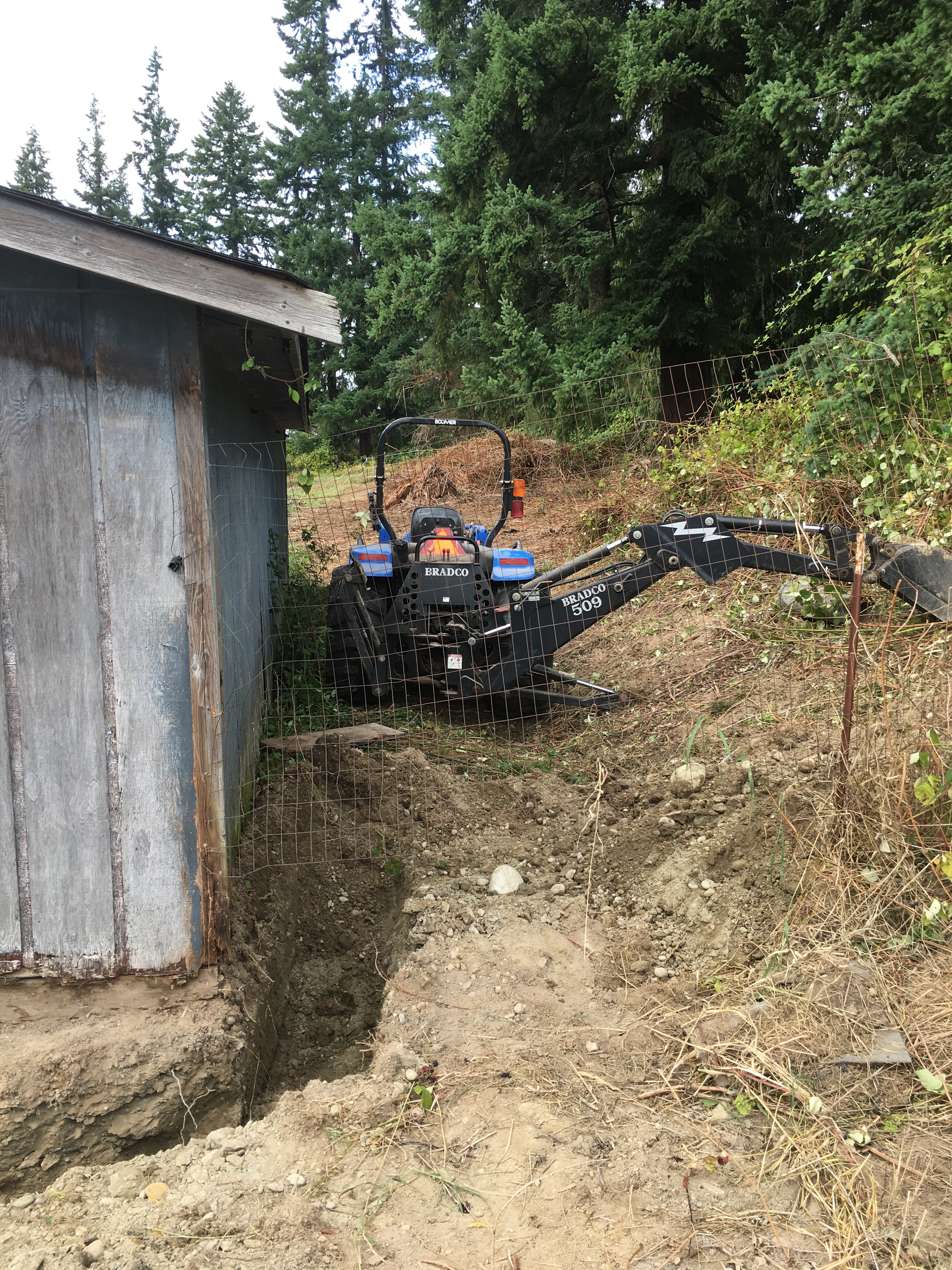
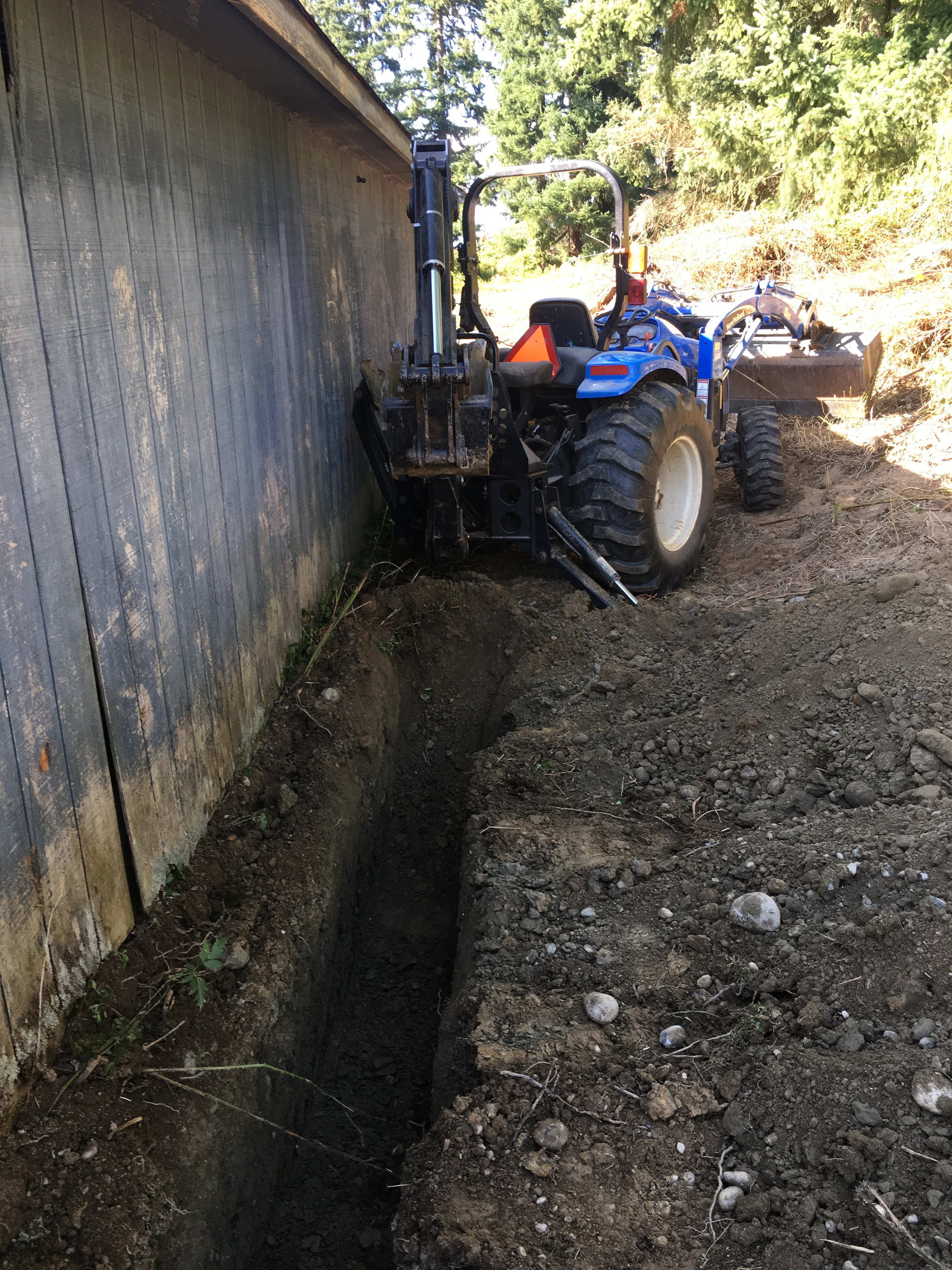
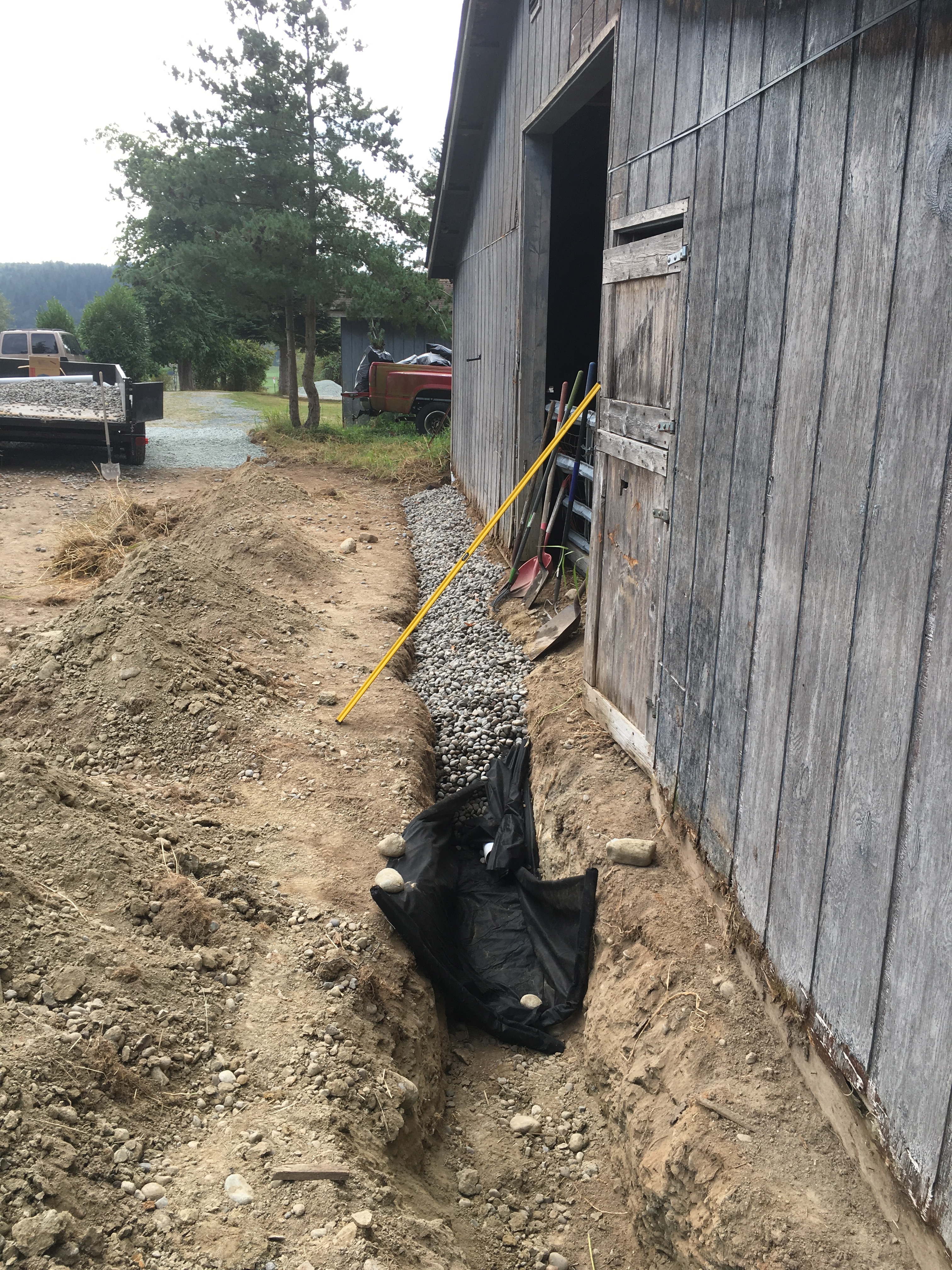

One of the best investments that we made was purchasing a tractor with a backhoe. It has been an invaluable tool. So, we used it to dig a trench around the barn. The trench was dug from about 1 foot deep and ended about 3 feet deep. We lined the trench with landscape cloth and back filled it with drain rock. By doing this we hope to eliminate the massive amount of water that puddles around and seeps through the ground in the barn floor.
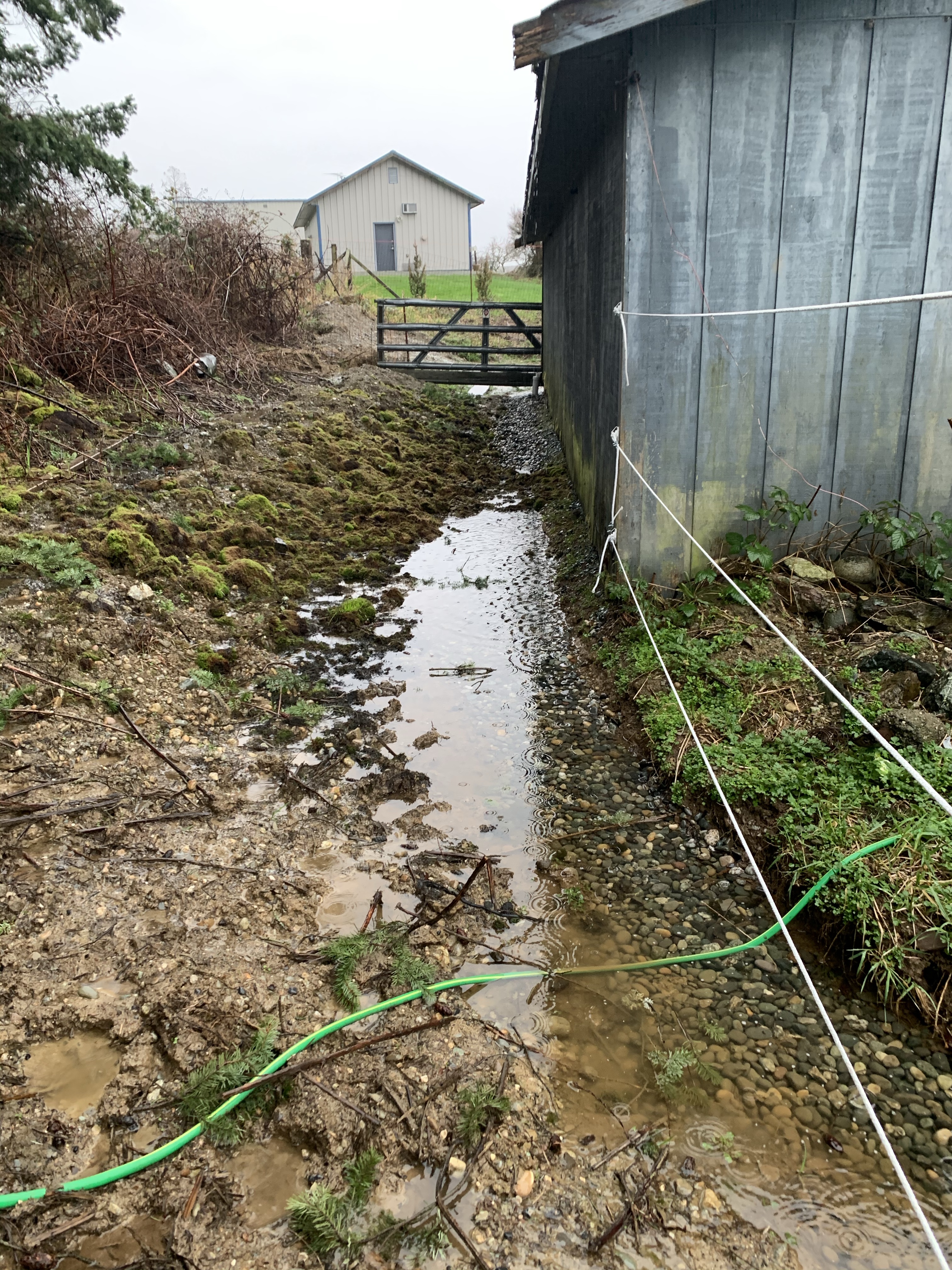
We were able to get a drain that functions pretty well. Even during the flooding that we experienced this winter the water stayed in the trench and eventually drained out to the area we have it pointed. The barn floor stayed dry and now we are on to building the stalls.
 Rural Home Renovations